
Cancer Spatial Epidemiology
Identify disparities, investigate clusters, and connect environmental exposures to cancer incidence, mortality, and screening rates.
Why Do Cancer Researchers Need Spatial Analysis Software?
Spatial analysis reveals where cancer disparities exist, which communities face the greatest risk, and how patterns are changing over time. It informs cancer’s causal factors (e.g. environment).

Cancer Burden Varies by Place
Incidence rates, mortality rates, and stage at diagnosis all vary by geography. Rural communities face challenges different from those in urban centers. Mapping these patterns is the first step toward understanding—and addressing—them.

Environment and Access Shape Outcomes
Cancer outcomes are shaped by factors that cluster geographically, such as air quality, proximity to industrial facilities, food access, screening availability, and availability of oncologists. Spatial analysis and disease mapping software connect exposures and access to the outcomes they influence.

Trends Require Temporal Analysis
Is lung cancer declining faster in some regions than others? Are late-stage diagnoses increasing in underserved areas? Answering these questions requires analyzing change over time, not just snapshots.

Registry Data Needs Context
Cancer registries provide the outcomes. But understanding why rates differ requires layering in environmental exposures, demographic data, healthcare access, and socioeconomic indicators; this is data that lives in separate systems.
KEY FEATURES
Why Cancer Researchers Use Vesta’s Geospatial Analysis Platform
Cancer Cluster Investigation
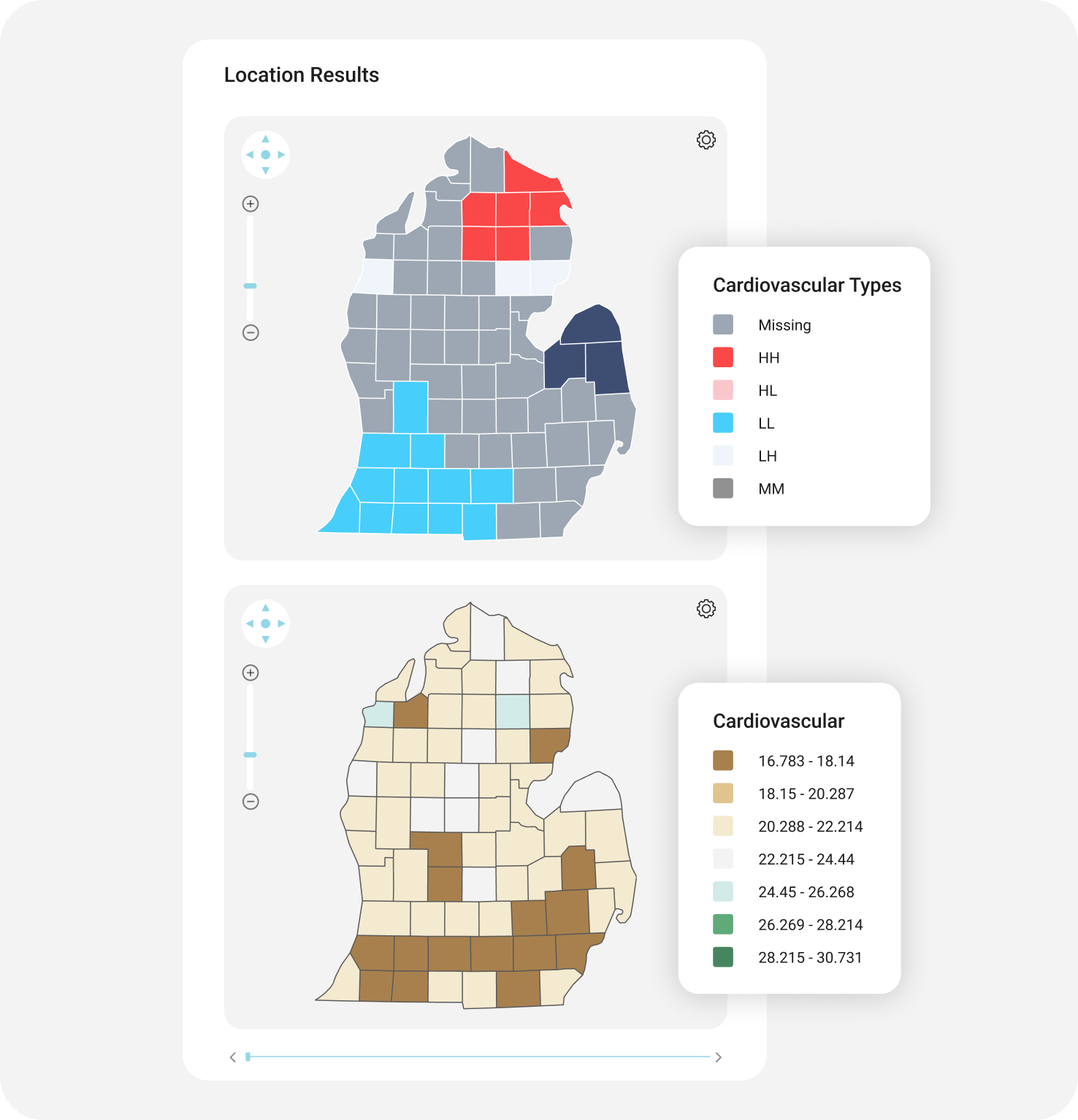
Identify statistically significant clusters of cancer incidence or mortality. Overlay cluster locations with EPA toxic release data, Superfund sites, and air quality measures to investigate potential environmental links.
Screening Access and Late-Stage Diagnosis
Map screening rates against late-stage diagnosis patterns. Combine CDC PLACES mammography or colorectal screening data with registry stage-at-diagnosis to identify where access gaps are costing lives.
Environmental Justice Analysis
Analyze how cancer burden correlates with environmental exposures and social vulnerability. Layer CDC SVI, EPA EJSCREEN data, and Census demographics to identify communities facing compounded disadvantage.
Temporal Trend Analysis
Track how cancer rates change over time with Geospatial Joinpoint regression. Identify which counties or regions are improving, which are falling behind, and whether disparities are widening or narrowing.
Connect the Cancer Data You Already Use
Vesta imports data directly from surveillance systems and public data sources that power cancer spatial epidemiology, including:
- CDC WONDER (USCS)
- State Cancer Profiles (NCI/CDC)
- CDC PLACES & Social Vulnerability Index (SVI)
- Census ACS
- EPA Air Quality System (AQS)
- HRSA Area Health Resources File
- ATSDR Superfund/CERCLA
Let the Vesta AI Advisor Guide Your Analysis
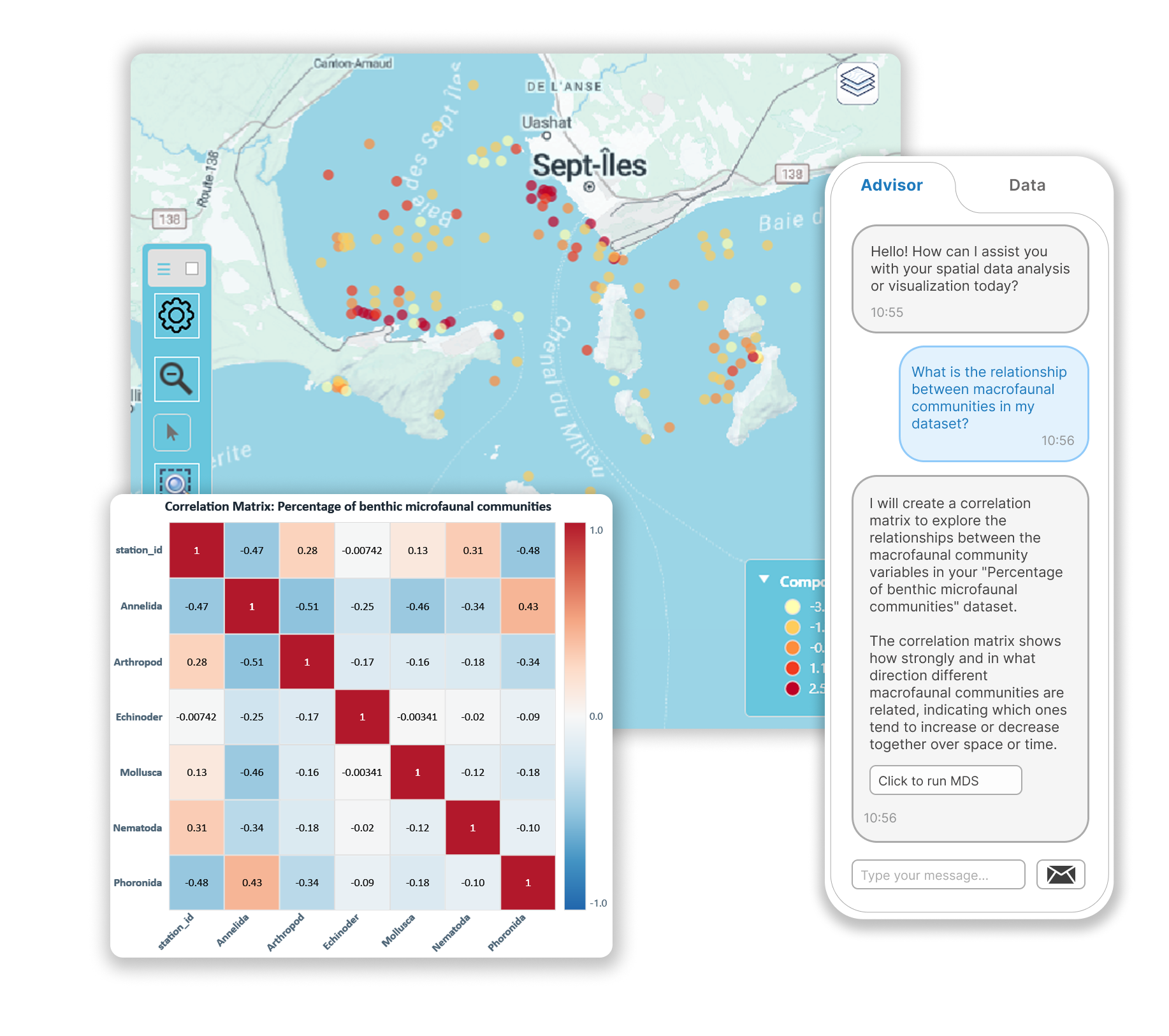
Cancer spatial epidemiology often requires assembling registry extracts, environmental exposure layers, screening data, and demographic context. That’s four or five sources before analysis can begin. The Vesta AI Advisor retrieves public data layers, helps you import your registry files, and proposes the right spatial method for your research question, all while keeping your confidential data layers secure.
Ready to Accelerate Your Spatial Epidemiology Research?
Try Vesta risk-free for 14 days. Schedule your kick-off call to trial Vesta today.